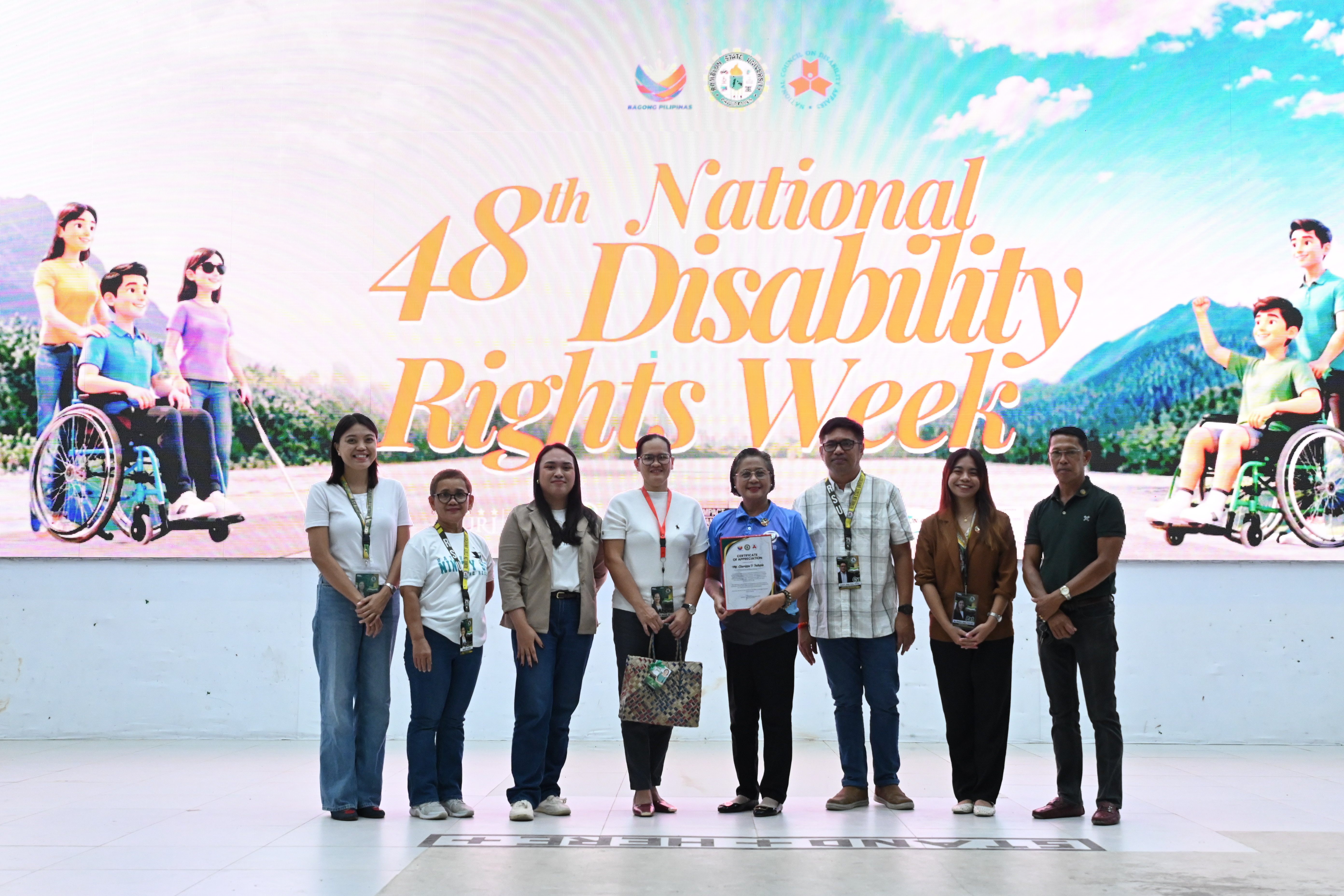
Romblon State University (RSU), through its Advocacy Office and in partnership with the Provincial Persons with Disabilities Affairs Office (PDAO), joined the nationwide observance of the 48th National Disability Rights Week on July 23, 2026, at the University Quadrangle. The activity gathered students, faculty members, university officials, and employees, with participants from the University's satellite campuses joining virtually via Zoom.
Anchored on this year's theme, “Rights First, Legislation Forward – Strategic Action for Equal Participation and Inclusive Development,” the celebration forms part of the National Council on Disability Affairs' (NCDA) nationwide campaign to promote the rights, welfare, and meaningful participation of persons with disabilities.
In her welcome message, Vice President for Academic Affairs Dr. Emelyn F. Montoya emphasized the University's continuing responsibility to cultivate an inclusive learning environment where diversity is valued and every individual is given equal opportunities to participate and succeed.
“Ang kapansanan ay hindi kailanman sukatan ng kakayahan o potensyal ng isang tao. Rather, it is our willingness to embrace diversity and provide equal opportunities that defines the kind of institution we aspire,” Dr. Montoya said.
A highlight of the program was the University-wide Lecture on Disability Rights delivered by Ms. Clarissa F. Fetesio, Training Specialist and Special Operations Officer and Focal Person for ParaTeacher at the Provincial Persons with Disabilities Affairs Office.
Ms. Fetesio underscored that disability rights are human rights, emphasizing the Philippines' commitment to the United Nations Convention on the Rights of Persons with Disabilities (UNCRPD) and the importance of accessible communication, inclusive participation, and representation of persons with disabilities in decision-making processes. She also discussed key national laws that safeguard the rights of persons with disabilities, including those promoting accessibility, inclusive education, employment opportunities, and social protection.
She further called on participants to help build a more inclusive society by recognizing persons with disabilities as rights holders entitled to dignity, respect, and equal participation. Ms. Fetesio stressed that genuine inclusion requires more than mainstreaming, highlighting the need for accessible facilities, assistive technologies, trained educators, and adequate support systems to ensure meaningful participation for all.
Following the lecture, participants took part in the Campus-Based Inclusive Sports Challenge organized by the University's Sports Development Program Office under the leadership of Director Ms. Alphee F. Lachica. The activity featured adaptive sporting events such as adapted basketball, modified sitting volleyball, and target ball, allowing participants to experience inclusive recreation and gain a deeper appreciation of the importance of accessibility and equal opportunities in sports.
The event concluded with a processing, reflection, and activity debriefing facilitated by the Guidance and Counseling Services Office, providing participants an opportunity to reflect on the day's learnings and their role in fostering a more inclusive university community.
The observance served as a reminder that creating an inclusive society requires collective action, where policies, programs, and everyday interactions empower every individual to participate fully and equitably in community life.
In her welcome message, Vice President for Academic Affairs Dr. Emelyn F. Montoya emphasized the University's continuing responsibility to cultivate an inclusive learning environment where diversity is valued and every individual is given equal opportunities to participate and succeed.
“Ang kapansanan ay hindi kailanman sukatan ng kakayahan o potensyal ng isang tao. Rather, it is our willingness to embrace diversity and provide equal opportunities that defines the kind of institution we aspire,” Dr. Montoya said.
A highlight of the program was the University-wide Lecture on Disability Rights delivered by Ms. Clarissa F. Fetesio, Training Specialist and Special Operations Officer and Focal Person for ParaTeacher at the Provincial Persons with Disabilities Affairs Office.
Ms. Fetesio underscored that disability rights are human rights, emphasizing the Philippines' commitment to the United Nations Convention on the Rights of Persons with Disabilities (UNCRPD) and the importance of accessible communication, inclusive participation, and representation of persons with disabilities in decision-making processes. She also discussed key national laws that safeguard the rights of persons with disabilities, including those promoting accessibility, inclusive education, employment opportunities, and social protection.
She further called on participants to help build a more inclusive society by recognizing persons with disabilities as rights holders entitled to dignity, respect, and equal participation. Ms. Fetesio stressed that genuine inclusion requires more than mainstreaming, highlighting the need for accessible facilities, assistive technologies, trained educators, and adequate support systems to ensure meaningful participation for all.
Following the lecture, participants took part in the Campus-Based Inclusive Sports Challenge organized by the University's Sports Development Program Office under the leadership of Director Ms. Alphee F. Lachica. The activity featured adaptive sporting events such as adapted basketball, modified sitting volleyball, and target ball, allowing participants to experience inclusive recreation and gain a deeper appreciation of the importance of accessibility and equal opportunities in sports.
The event concluded with a processing, reflection, and activity debriefing facilitated by the Guidance and Counseling Services Office, providing participants an opportunity to reflect on the day's learnings and their role in fostering a more inclusive university community.
The observance served as a reminder that creating an inclusive society requires collective action, where policies, programs, and everyday interactions empower every individual to participate fully and equitably in community life.